Generative research for new hiring tool

This project shows how I helped my client create a product roadmap for a new collaborative hiring management software suite by engaging in contextual inquiries resulting in personas, a current journey map, prioritized concept ideas, a future journey map, and a storyboard.
the scenario
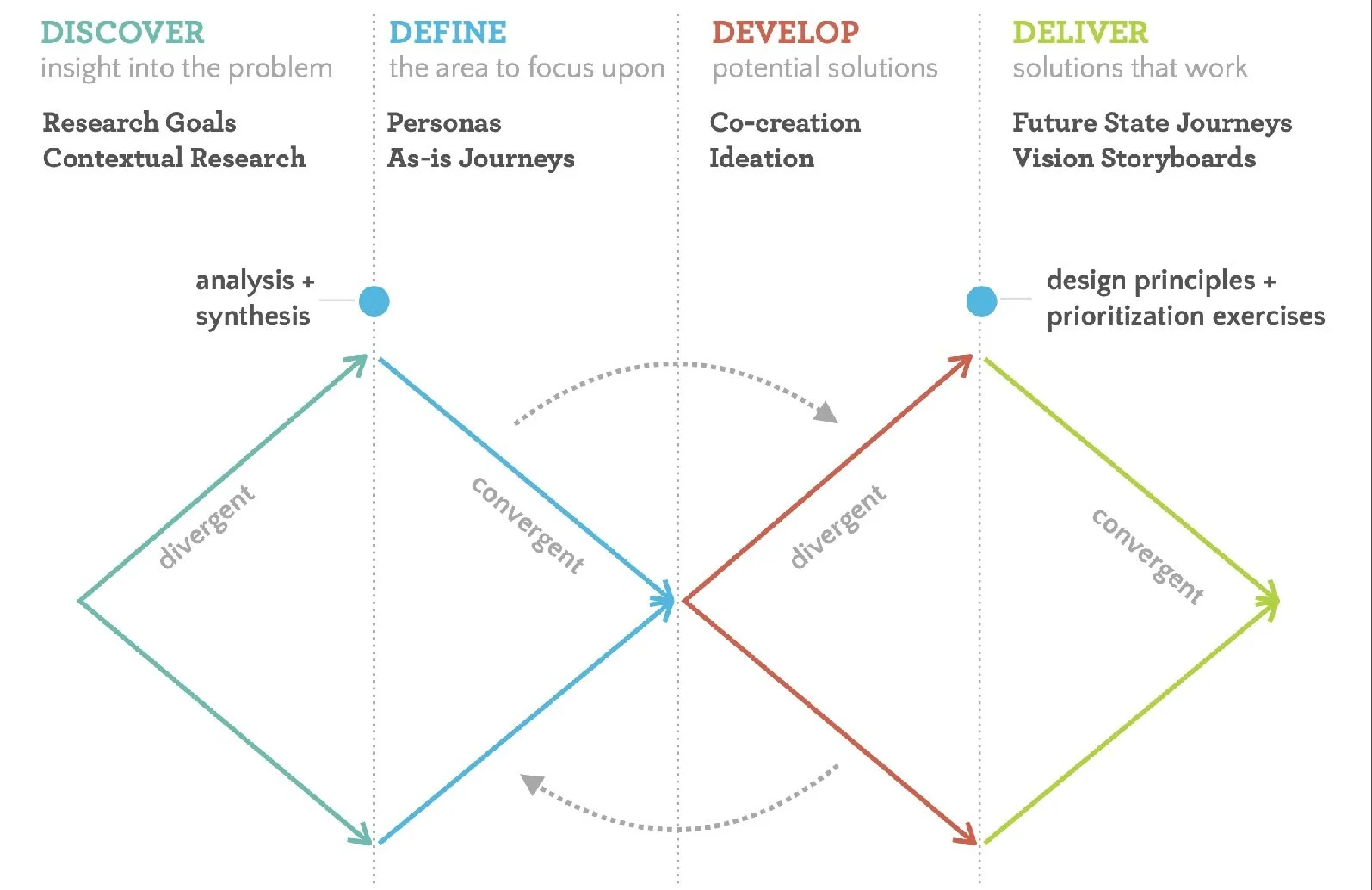
My client needed help carving out short- and long-term strategic roadmaps for creating brand new B2B collaborative software for the hiring process. I was tasked with identifying product concepts that were critical to job performance and business success, while giving special attention to the communication and collaboration side of things, as this is what they wanted the new software to focus on
I led the research, with the goal of fully understanding the end-to-end hiring process to ultimately create personas and journey maps as some of the final deliverables. I interviewed a mix of hiring managers, recruiters and HR managers in order to get the full picture of the process. As you can see in the illustration above, there were quite a few steps that went into the project.
interviews
I and my research partner conducted interviews with five participants in Atlanta and four in Chicago in participants’ workplaces, where we could gather contextual data about how they interacted with their environment while going through the hiring process
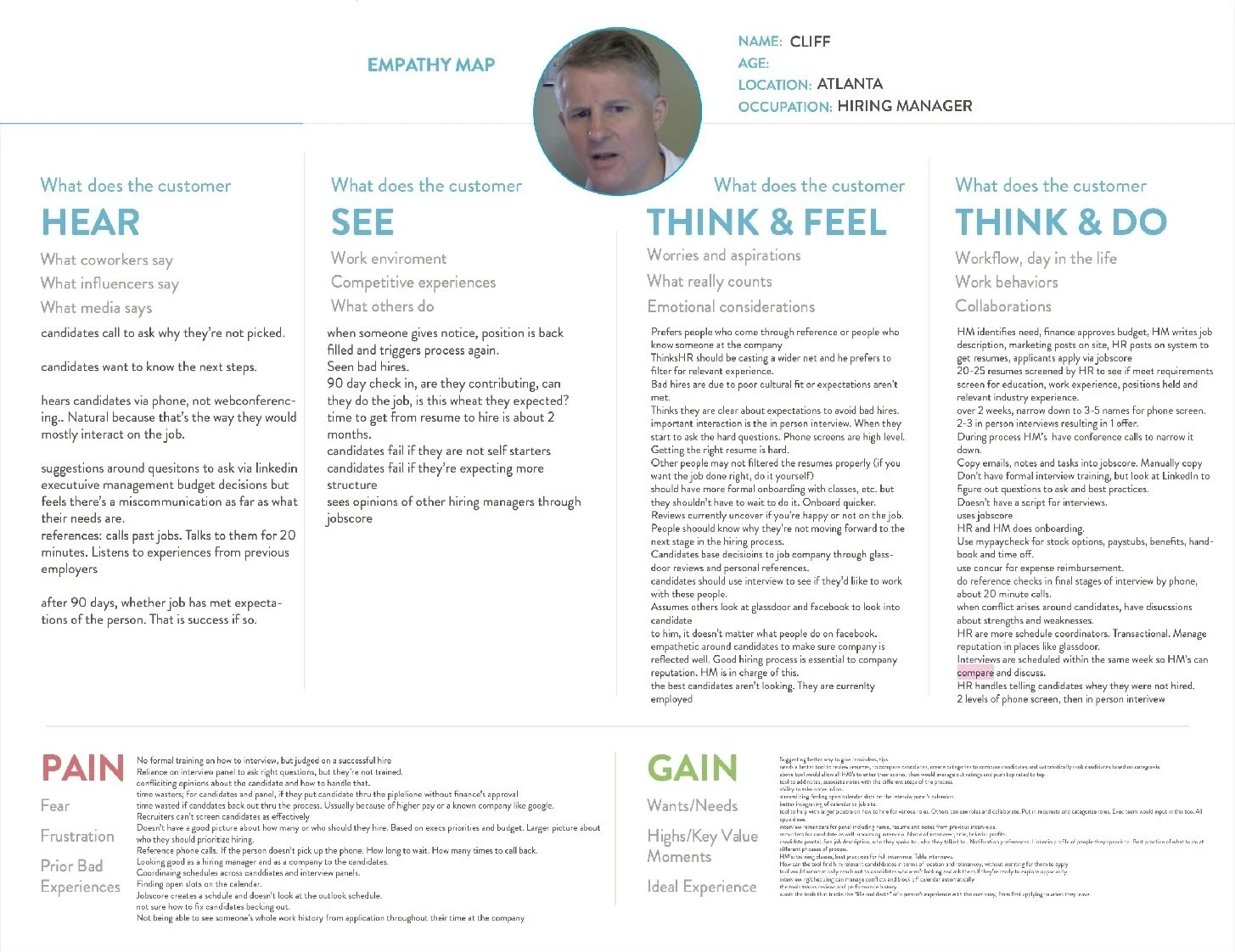
After each session, my partner and I debriefed and filled out empathy maps. You can see an example of one we filled out below:
analysis & synthesis
Following the completion of all interviews, I led the analysis and synthesis.
My first step was determining what behavioral spectra we observed, essentially, what were the extremes we saw among participants. For example, one spectrum I crafted was “creates and manages a process” vs “follows a process”. I then plotted the participants on each spectra to get a sense of any trends regarding how they tended to fall.
Once I had a view of patterns I was seeing and I had confidence about how I was going to segment the personas, I began affinity diagraming to craft the journey maps.
I kept the proto-personas I had begun in the prior step in mind while I affinity diagramed, then determined how I would segment the data to fit into the different personas, matching up with their associated spectra plotting.
The first draft was done in Google sheets, then I worked with a designer to make the final personas and journey maps.
presenting artifacts
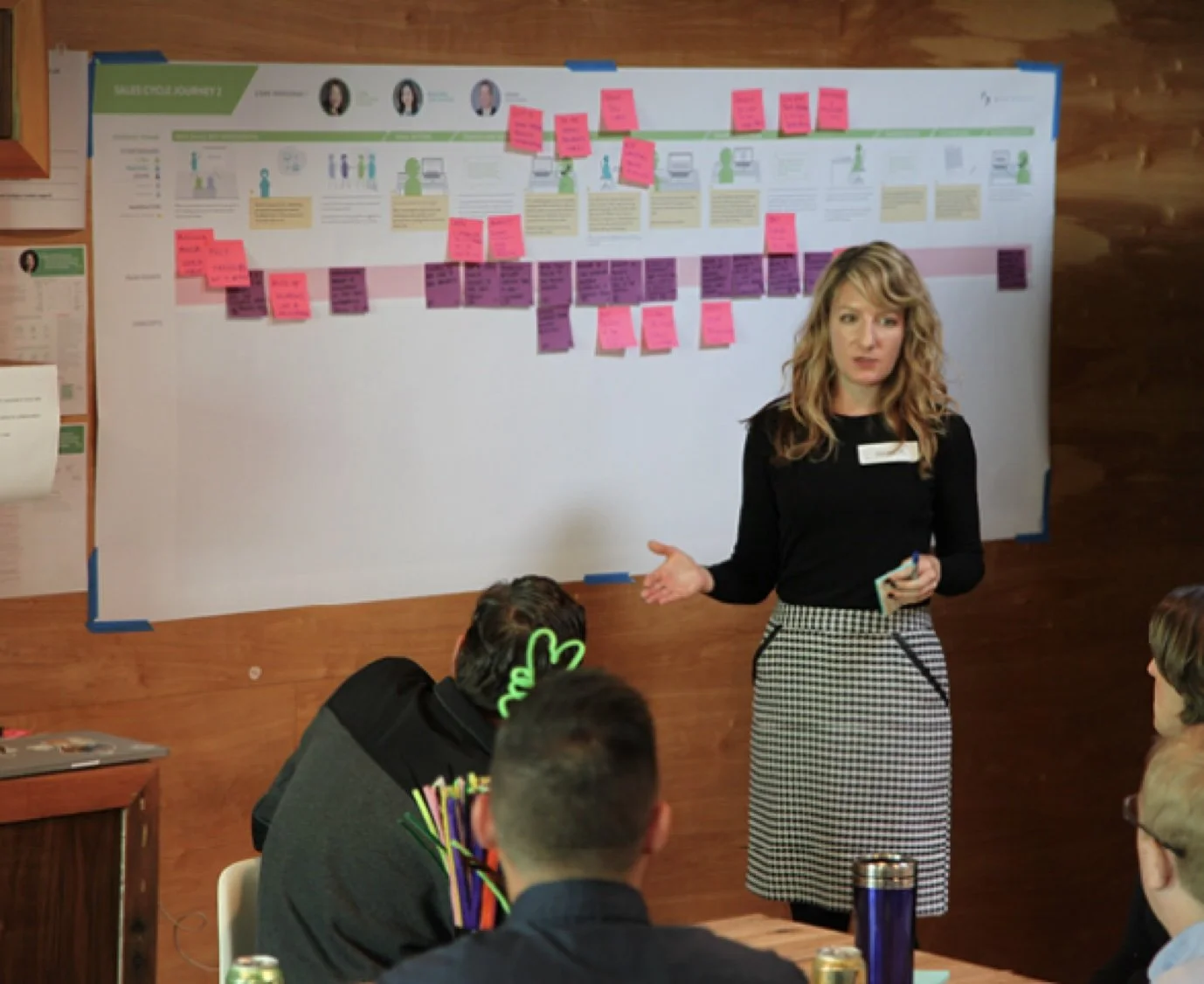
We then held a workshop with the cross-functional client group and some new representative participants, where I presented the hiring personas and journey maps.
Sections in the personas included a representative quote, overview of the persona’s scenario, associated behavioral spectra, moments that matter, personal motivations, success as defined by the company, pain points, and touchpoints.
The journey maps showed all three core hiring personas: Emily the recruiter, Anne the HR manager, and Derrick the hiring manager, since we learned that their roles all relied on each other. Swim lanes of the journey map included phases, a narrative storyline highlighting pivotal moments, tasks of each persona during each journey phase, touchpoints, moments of delight, pain points, ideas participants gave for improvement, and representative quotes.
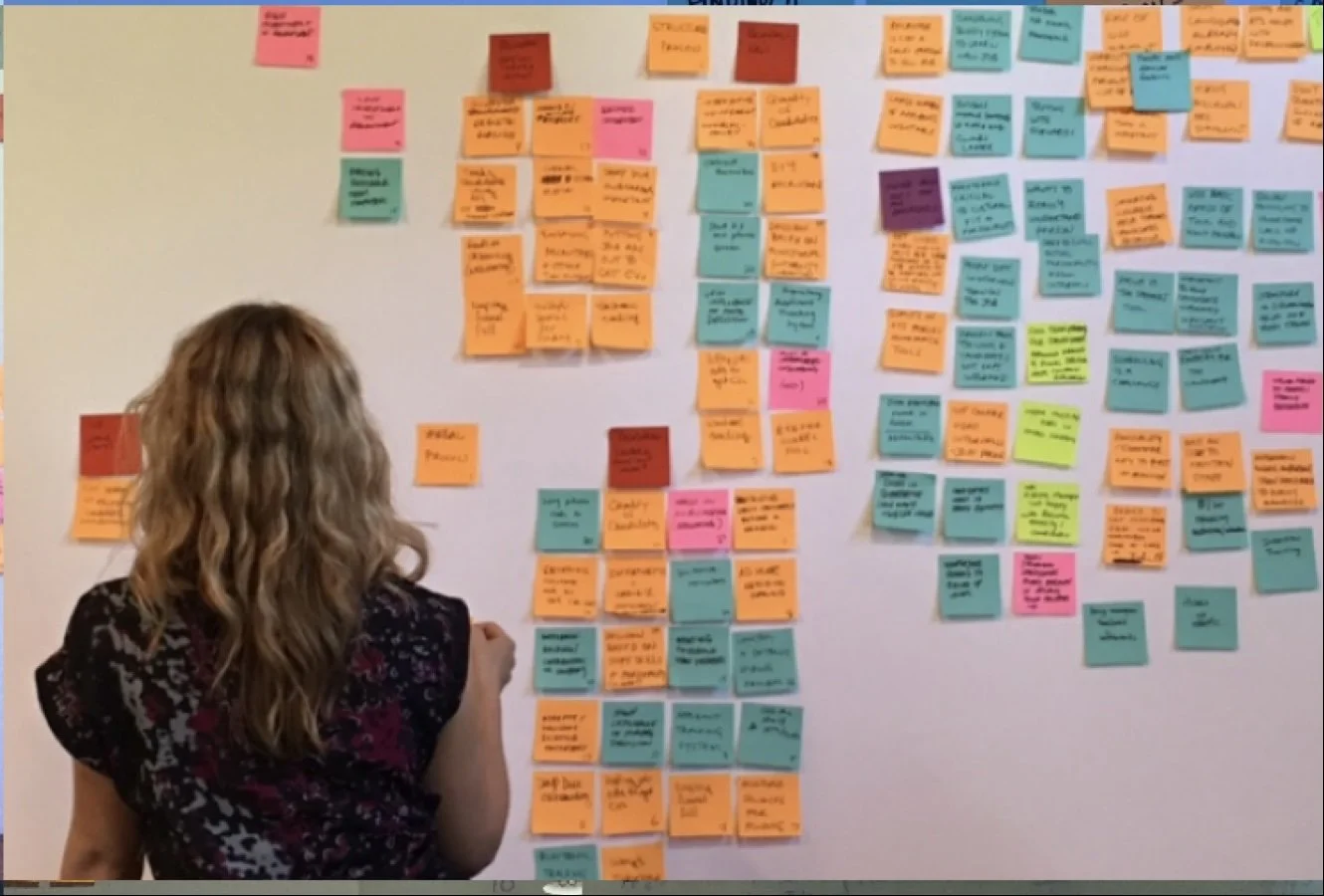
After presenting them, we gave workshop participants the opportunity to add sticky notes with information they felt was missing, or to correct anything they thought needed revising
ideation workshop
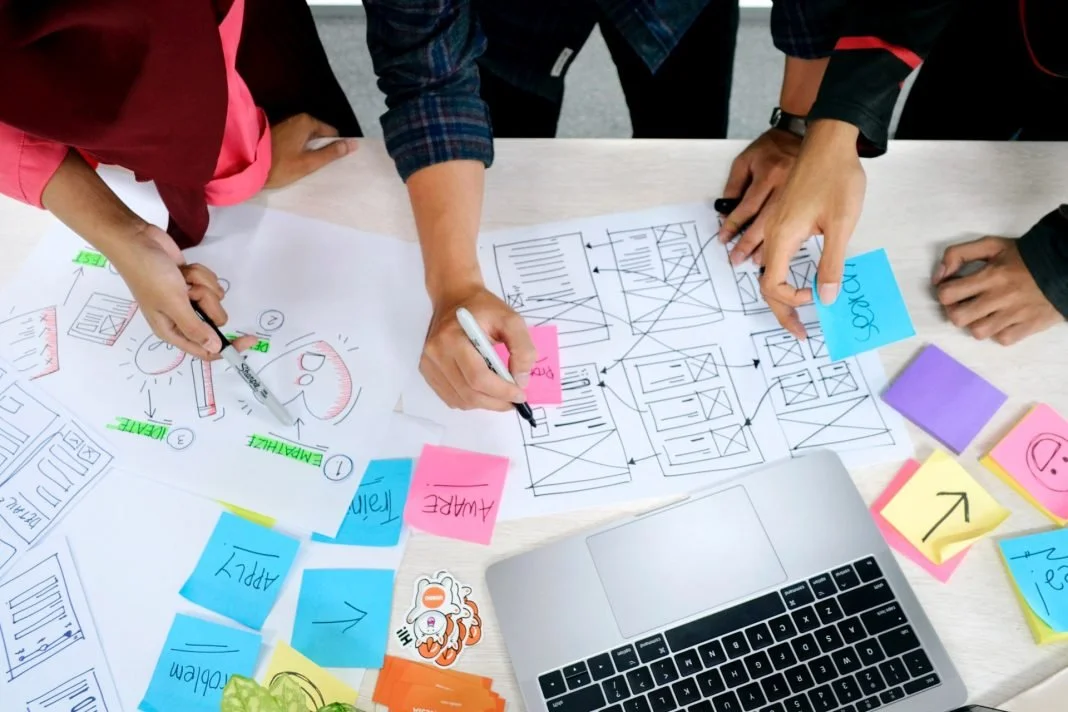
Following the presentation which allowed the workshop attendees to become very familiar with the artifacts, we began the ideation portion of the workshop.
The first step was to allow everyone time to brainstorm and write out product concept ideas. Following this, the authors of each idea presented them, then the team dot-voted on their favorites.
We then broke back into our groups and drew out the top-voted ideas.
Next, we presented those ideas, then voted again.
prioritization
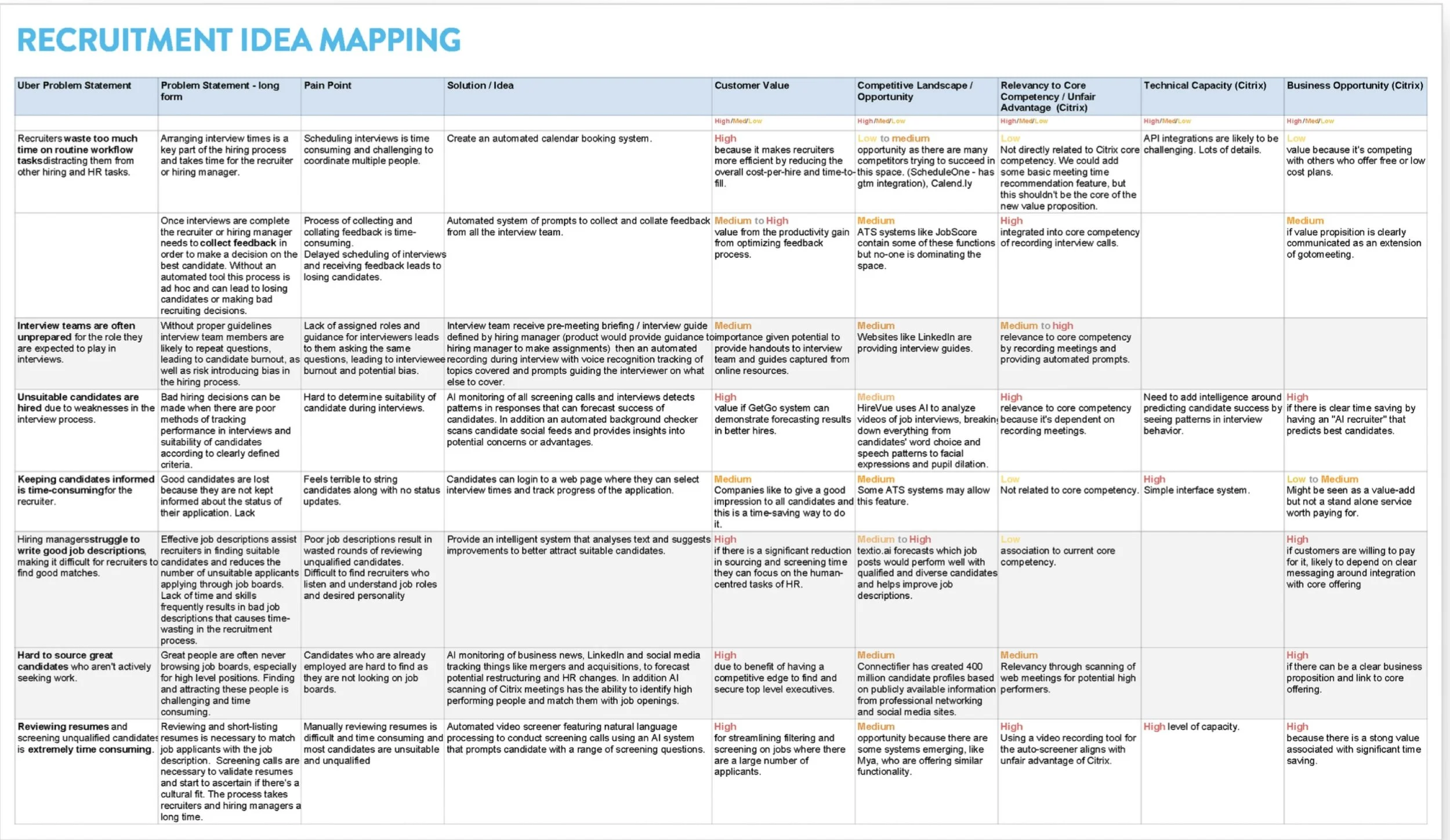
Following the workshop, we collected and laid out all top-voted ideas generated from workshop and conducted a prioritization exercise. For each concept, we listed the user problem statement and pain point it would resolve, and then a description of the solution.
We then prioritized each concept on a scale of high, medium and low according to:
customer value
competitive landscape opportunity (in other words, whether anyone else is providing a similar concept in their product
relevancy of each idea to Citrix’s core competency, or in other words, what gives Citrix the advantage since they already offer a related service through their products (e.g., offering a video-recording tool for an auto-screener)
technical feasibility
and business opportunity.
From this, we were able to isolate the most valuable ideas, and incorporate them into the next step.
future state journey maps
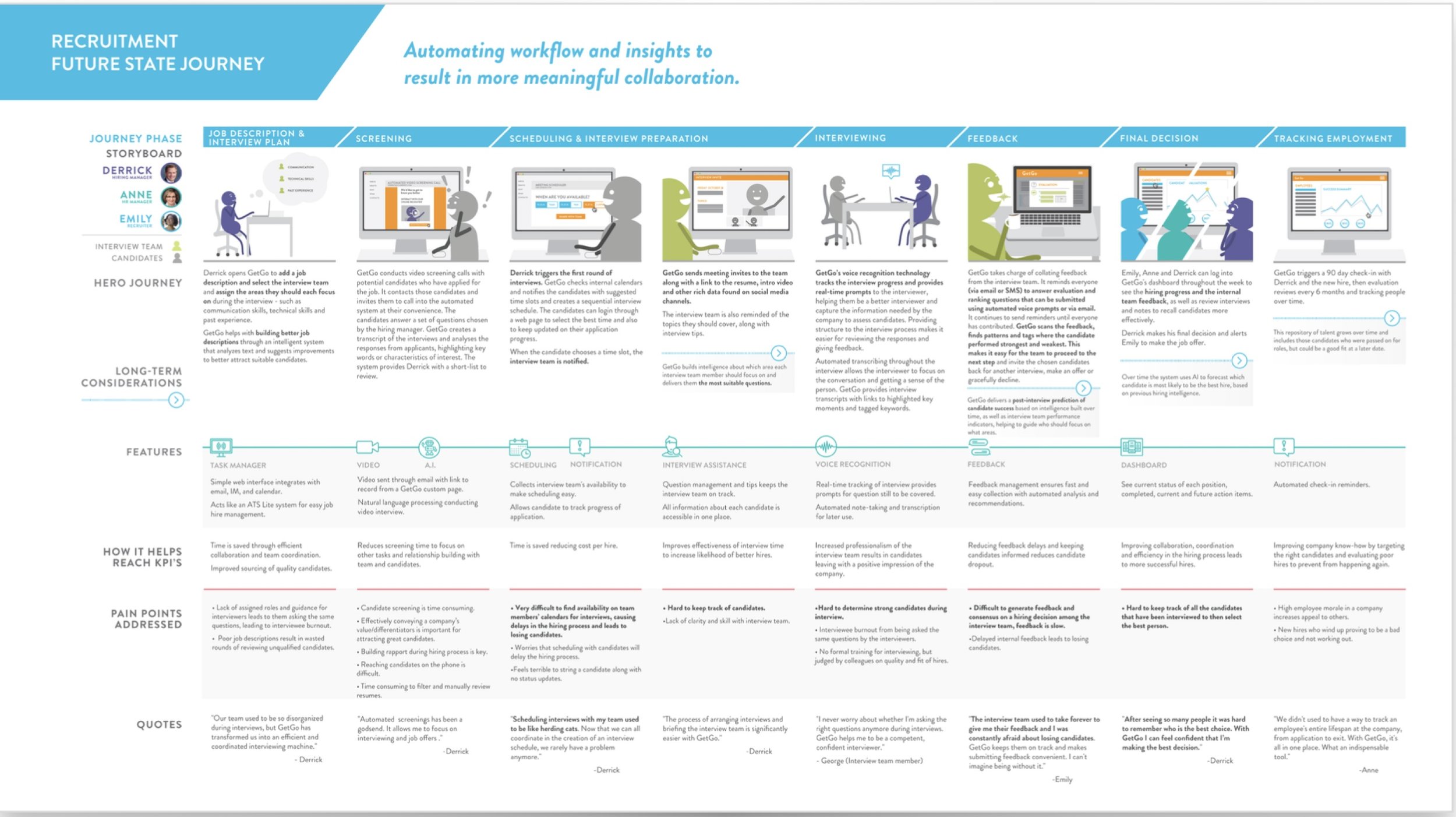
We took the highest rated ideas and pluggex them into future journey maps. The journey maps had the following swim lanes:
the journey phase
illustrations depicting the journey phases
the hero journey’s narrative
any long-term considerations
product features being implemented (this is where we plugged the ideas in)
how the idea helps the customer reach their goals
which pain points each idea addresses
and imagined quotes from the personas using the new products:
storyboard
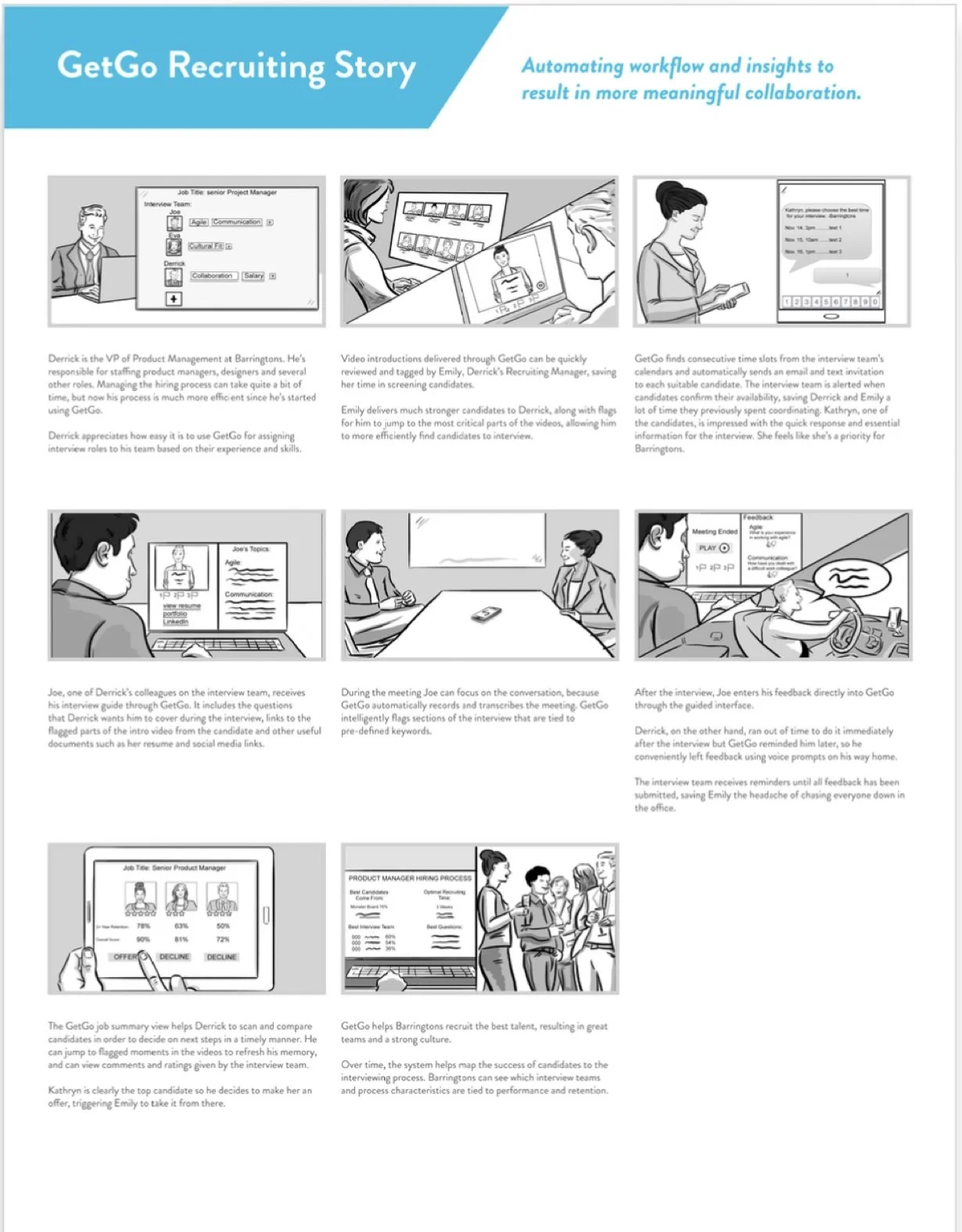
From the future state journey map, I worked with my research partner and lead designer to craft storyboards showing the future journey in action. This element was important to have in addition to the future journey map because it brought the future journey to life in a story, creating excitement among the client of how they could impact their customers: